
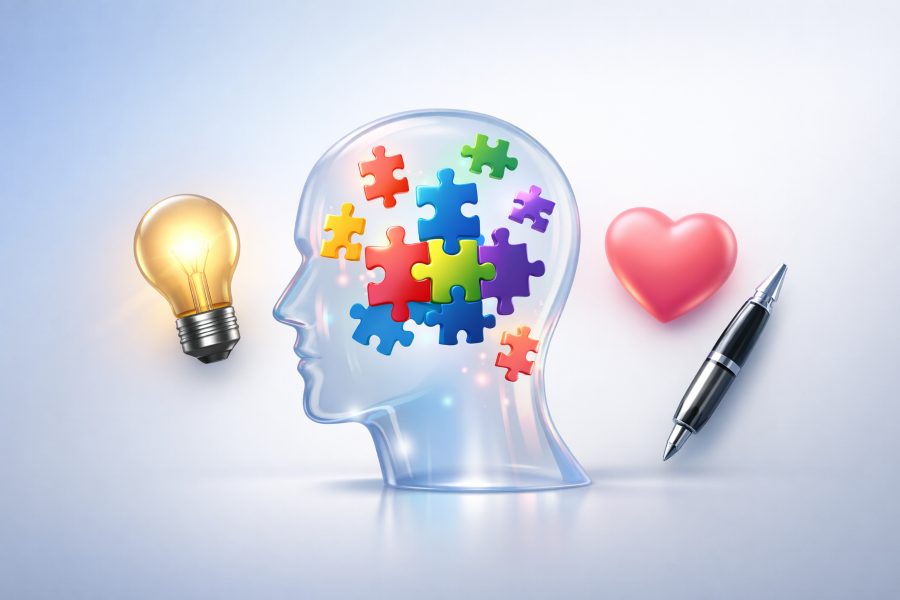
In an era dominated by high-speed digital entertainment and instant gratification, an unlikely pastime has maintained its stronghold on human attention: the puzzle. From the humble Sunday morning crossword to intricate 5,000-piece jigsaws and complex mechanical brainteasers, humans nurture a profound, almost biological obsession with solving difficult problems.
But why do people like puzzles when they are, by definition, difficult? Why do we voluntarily choose hobbies that cause frustration, confusion, and require immense patience?
The answer is not singular. It is a complex tapestry woven from cognitive science, evolutionary psychology, and emotional regulation. Puzzles provide a unique sanctuary where chaos can be turned into order, offering a sense of control that is often absent in our daily lives. Whether you are a casual solver or a competitive logician, understanding the science behind this hobby reveals why your brain craves the challenge.
At its heart, the human love for puzzles is driven by the dopamine reward system. Solving a problem bridges the gap between the known and the unknown, creating a "closed loop" of satisfaction. This process reduces anxiety, improves neuroplasticity, and induces a meditative "flow state" that rivals traditional mindfulness practices.
The Neuroscience of Satisfaction: Why Your Brain Loves the Struggle
When you engage with a puzzle, you aren't just passing time; you are conducting a full-scale orchestral performance within your brain. Different lobes and neurotransmitters activate simultaneously to create a sensation of pleasure derived from effort.
The Dopamine Rush
Every time you place a correct piece, your brain releases dopamine. This "reward molecule" creates a continuous stream of "micro-wins," creating a positive feedback loop that motivates you to finish the task.
Prefrontal Workout
Puzzles engage the prefrontal cortex, responsible for decision-making. This mental exertion acts as resistance training for the mind, improving "fluid intelligence" and strategic planning.
Hemispheric Sync
Puzzles engage the whole brain. The left hemisphere analyzes logical details, while the right handles creative visualization. This synchronization improves overall cognitive efficiency.
Hippocampus Activation
Solving puzzles, especially jigsaws, requires holding shapes in your mind while navigating space. This activates the hippocampus, the brain's storage center for long-term memory.
Neuroplasticity
New challenges force the brain to form new neural connections. This "rewiring" process improves mental agility and helps the brain adapt to new situations faster.
Cortisol Reduction
By shifting focus entirely to a singular, non-threatening task, puzzles lower the levels of cortisol (the stress hormone) in the body, acting as a biological tranquilizer.
The Psychology of Control: Finding Order in Chaos
Beyond the biology, there is a deep psychological need that puzzles satisfy. We live in a world that is often unpredictable, ambiguous, and messy. Work projects get delayed, relationships are complex, and global events feel out of our control.
Puzzles offer the exact opposite experience. They present a "closed system" problem. There is a beginning, a middle, and an absolute, undeniable end. There is a right place for every piece and a correct answer for every clue.
The Zeigarnik Effect
Have you ever felt an itching annoyance when you have to leave a puzzle unfinished? This is known as the Zeigarnik Effect. In psychology, this principle states that people remember uncompleted or interrupted tasks better than completed ones.
The human brain dislikes open loops. When a puzzle is unfinished, it creates a state of mild cognitive tension. Returning to the table to place the final piece resolves this tension, providing a massive sense of psychological relief and closure.
Entering the "Flow State"
Psychologist Mihaly Csikszentmihalyi coined the term "Flow" to describe a state of complete immersion in an activity. When you are puzzling, the difficulty level is usually perfectly matched to your skill level—hard enough to require focus, but not so hard that it is impossible.
In this state:
- Self-consciousness disappears.
- The sense of time distorts (hours feel like minutes).
- Distractions from the outside world fade away.
Exploring Puzzle Varieties and Their Specific Benefits
Not all puzzles stimulate the brain in the same way. Different types of challenges appeal to different personality traits and offer distinct cognitive benefits.
Jigsaw Puzzles
Best for: Visual-spatial reasoning.
Jigsaws require you to visualize the whole while manipulating parts. They are effective for short-term memory as you scan thousands of pieces for matches.
Crosswords
Best for: Verbal fluency.
These language-based puzzles delay memory decline by forcing the brain to search through its vast database of vocabulary and general knowledge.
Sudoku
Best for: Logical deduction.
These rely on "deductive reasoning." They train the brain to look for patterns and eliminate impossibilities, improving concentration and detail orientation.
Mechanical Puzzles
Best for: Tactile intelligence.
Rubik's cubes and wooden blocks engage "haptic" memory, bridging the gap between physical movement and mental processing.
Lateral Thinking
Best for: Creative problem solving.
Riddles and brain teasers force you to think "outside the box," breaking standard assumptions to find non-linear solutions.
Cryptograms
Best for: Analytical patterns.
Decoding ciphers and messages requires high-level pattern recognition and linguistic structural analysis, heavily taxing the analytical brain.
Puzzles as a Defense Against Aging
One of the most compelling reasons to adopt a puzzling hobby is long-term brain health. As we age, our cognitive processing speed naturally slows down. However, neuroscientific research supports the "Use It or Lose It" hypothesis.
Engaging in intellectually stimulating activities builds what scientists call Cognitive Reserve. Think of this as a savings account for brain function. People with a high cognitive reserve are more resilient to the physical changes associated with aging.
Beyond the Solitary: Social and Professional Impacts
While often viewed as a solitary activity for a rainy day, puzzles have evolved into powerful social tools and professional assets.
Collaborative Bonding
Jigsaws are a "low-stakes" social activity. They allow for periods of silence that aren't awkward, providing a shared goal that fosters cooperation among families.
Escape Rooms
The explosion of Escape Rooms proves people crave high-pressure puzzles. These simulate stress in a safe container, allowing groups to practice crisis management.
Recruitment
Tech companies use logic puzzles during interviews. They aren't looking for the right answer, but rather observing the candidate's approach to the unknown.
Professional Grit
Puzzles teach the value of trial and error. In a career, this translates to "grit"—the ability to persist through failure until a solution is found.
Therapeutic Rehab
Occupational therapists use puzzles to help stroke victims recover fine motor skills and spatial awareness, proving their value in physical recovery.
Patience Training
In a world of instant gratification, puzzles enforce delayed gratification. This trains the brain to remain calm and focused during long-term projects.
The Digital vs. Physical Debate
In the age of smartphones, puzzle apps are ubiquitous. But are they as effective as their physical counterparts?
Digital Puzzles: Offer convenience and adaptive difficulty levels. They are excellent for quick "brain training" sessions during a commute. However, they involve screen time, which can contribute to eye strain and digital fatigue.
Physical Puzzles: Offer a tactile experience that grounds the user in reality. The act of physically touching pieces adds a sensory dimension that screens cannot replicate. Furthermore, physical puzzles force you to disconnect from notifications and emails, providing a true mental break.
Conclusion: The Enduring Power of the Puzzle
So, why do people like puzzles? Ultimately, puzzles are a celebration of the human mind's potential. They allow us to exercise our innate curiosity, prove our capability to ourselves, and find pockets of order in a chaotic universe.
Whether you are piecing together a landscape, cracking a code, or filling in a grid, you are engaging in a ritual that soothes the soul and sharpens the intellect. In a world that often demands we multitask and rush, the puzzle invites us to slow down, focus on one thing, and persist until the picture is complete.
The next time you find yourself drawn to a puzzle, remember: you aren't just playing a game. You are engaging in a complex neurological workout that rewards your brain with joy, clarity, and peace.
Frequently Asked Questions
Do puzzles actually increase your IQ?
While puzzles may not permanently raise your raw IQ score, they significantly improve "fluid intelligence," which is the ability to reason and solve new problems. They also enhance working memory and processing speed, making you sharper in daily life.
Why do I get frustrated with puzzles but keep doing them?
This is "eustress," or beneficial stress. The frustration is part of the challenge that makes the eventual solution satisfying. Without the risk of failure or the feeling of difficulty, the dopamine reward upon completion would be minimal.
Can puzzles help with anxiety and depression?
Yes. Puzzles require singular focus, which distracts the brain from ruminating on negative thoughts. The repetitive action and clear goals provide a sense of predictability and control that can lower heart rate and blood pressure.
Is there a "best" time of day to solve puzzles?
It depends on the goal. Morning puzzling can "wake up" the brain and prime your logical faculties for work. Evening puzzling is excellent for winding down, as it shifts the brain away from the day's stressors and into a meditative state before sleep.
Are Sudoku or Crosswords better for the brain?
Neither is strictly "better"; they train different areas. Sudoku improves logical thinking and number patterns, while Crosswords improve verbal memory and general knowledge. For maximum brain health, it is best to alternate between them.